
Storage-First Kitchen Design for Modern Homes
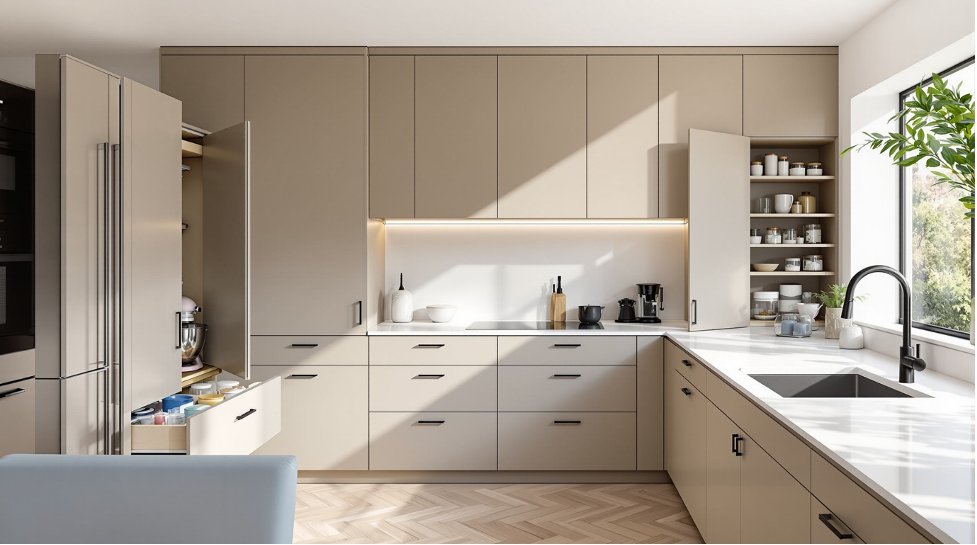
Kitchen Remodeling in Granger Storage Design
Quick Take: Most Granger kitchens built in the late 1980s and early 2000s weren’t designed for today’s family routines. A storage-first remodel fixes that by letting function drive every cabinet and layout decision. Homeowners who plan storage early end up with kitchens that work better and hold their value longer.
A kitchen can look brand new and still feel like it’s working against you. Counters fill up fast. Cabinets run out of room before the groceries do. For most Granger homeowners, that’s not a housekeeping problem. It’s a layout that was never built for how families actually live today.
Getting storage right means planning it before anything else. Before cabinet door styles, before countertop colors, before anything goes on order. When storage leads the design, the whole project comes together more smoothly. We’ve seen it make a real difference for Granger families who’ve been living with cramped kitchens for years.
Why Late 80s and Early 2000s Kitchens Fall Short on Storage
Homes built in Granger in the late 1980s and early 2000s followed a pretty standard kitchen formula. A row of upper cabinets, a few base cabinets with a single shelf inside, and maybe one pantry closet if you were lucky. That layout made sense for smaller households with simpler routines. It doesn’t hold up nearly as well for the way most families cook and shop today.
The cabinets themselves are part of the problem. Most base cabinets from that era use a door-and-shelf setup. You open the door, and there’s one fixed shelf inside with a lot of dead space above and below it. Pots stack on top of each other. Cutting boards lean against the back wall. Things get buried and forgotten.
Corner cabinets are another weak spot. Builders put them in because they fill the square footage, not because they’re easy to use. A lot of homeowners just stop putting things in them altogether. That’s usable space going to waste in kitchens that already don’t have enough of it.
What Storage-First Kitchen Design Actually Means
Storage-first design is a planning approach. Instead of picking cabinets based on how they look, you start by mapping out exactly what you need to store and where it needs to live. Pull-out shelves, drawer banks, pantry towers all of it gets decided before anything else gets locked in.
Most kitchen projects go in the other direction. Homeowners pick a style they like, choose their countertops, then try to fit storage into whatever space is left. That’s how you end up with a beautiful kitchen that still doesn’t have room for your pots and pans.
When storage leads the plan, the layout decisions follow naturally. The pantry location gets set before the cabinets get ordered. The number of drawers gets confirmed before the design gets finalized. Our professional kitchen design process is built around this kind of thinking, so nothing gets figured out after the fact.
That shift in approach sounds simple. In daily use, it changes how the whole kitchen feels.
The Cabinet Configurations That Do the Most Work
Not all cabinets are built the same way. The ones that solve storage problems are designed around movement and access, not just capacity. These are the configurations that show up most often in well-planned Granger kitchens:
- Drawer banks instead of door-and-shelf bases: Three or four drawers stacked vertically beat a single shelf every time. Pots, pans, and lids all stay visible and easy to grab.
- Pull-out shelves inside base cabinets: If you keep door-and-shelf cabinets, pull-outs make them usable. Everything slides forward instead of hiding in the back.
- Tall pantry towers: A floor-to-ceiling pantry cabinet holds far more than a closet pantry and keeps everything at eye level.
- Built-in spice racks and tray dividers: These small additions cut down on counter clutter fast.
- Roll-out trash and recycling cabinets: They free up floor space and keep bins out of sight.
Cabinet lines like Mouser, Wellborn, and Waypoint all offer these configurations. Our kitchen cabinets page has more detail on what’s available across each line.
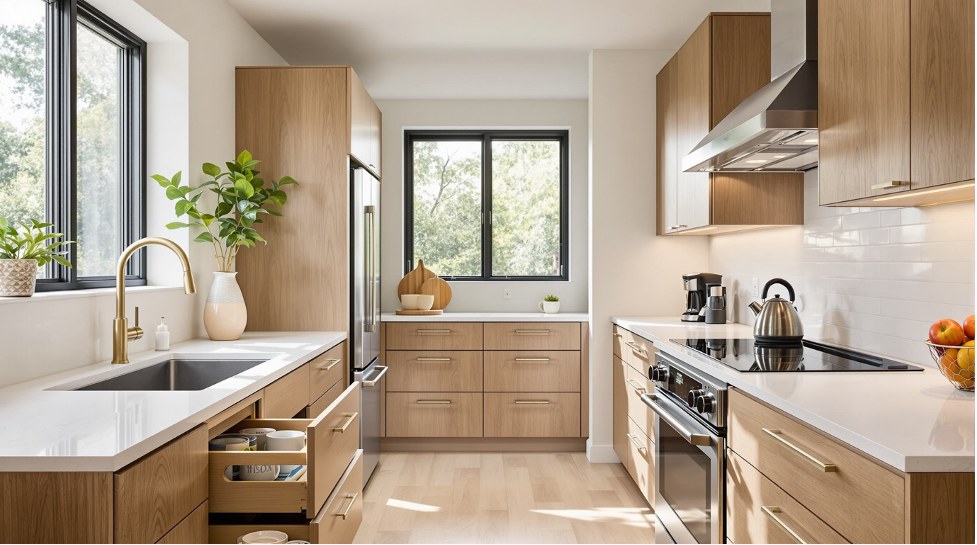
Hidden Storage Spots Most Homeowners Leave on the Table
Some of the best storage opportunities in a kitchen don’t show up in the original plan. They’re the spots builders skip over or treat as afterthoughts. Catching them early in the design phase means more usable space without adding square footage.
Corner Cabinets
Standard corner cabinets are notoriously hard to use. A lazy Susan helps, but it still leaves awkward gaps. Better options include pull-out corner drawers and swing-out shelving systems that bring everything to the front. They cost more than a basic corner cabinet, but homeowners rarely regret the upgrade.
Island and Peninsula Storage
Islands get planned for counter space. Storage usually comes last. A well-designed island can hold deep drawers on one side, open shelving on another, and a built-in recycling station on the end. If you’re adding an island during your kitchen remodeling project, nail down the storage plan before the dimensions get locked in.
Pantry Organization
A pantry tower works best when the interior gets planned too. Adjustable shelving, pull-out produce bins, and door-mounted spice racks all make a real difference. A pantry that isn’t organized on the inside fills up fast and stays frustrating.
Designing Storage Around How Your Household Actually Cooks
Storage planning works best when it starts with real habits, not a general idea of what a kitchen should have. Cooking routines vary a lot from one household to the next. A family that shops in bulk needs more pantry depth. A home with young kids benefits from lower drawers they can reach on their own. Two people cooking at the same time need different clearances than one.
Granger households tend to run busy. School schedules, work commutes, weekend hosting. The kitchen gets used hard across all of it. A grocery drop zone near the entrance to the kitchen sounds like a small thing, but it changes how the whole room flows after a shopping run. A dedicated coffee and breakfast station keeps morning routines from piling up on the main prep counter.
These aren’t design trends. They’re practical decisions that come out of talking through how your family actually moves through the kitchen. Our kitchen remodeling process starts with exactly that conversation. We ask about your routines before we ask about your style preferences.
Getting that order right is what separates a kitchen that looks good from one that works well day after day. Storage built around your habits stays organized longer and causes less daily friction than storage built around a floor plan.
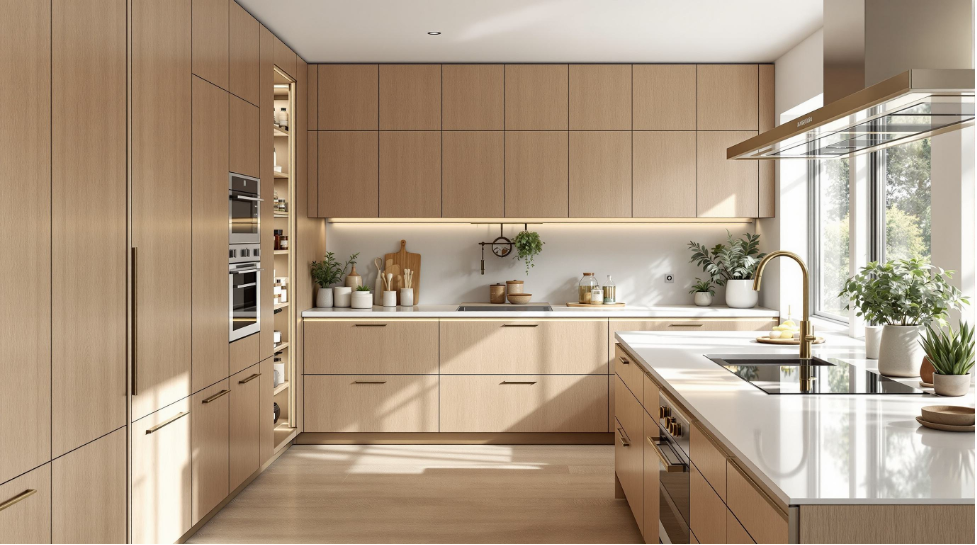
What the Design Process Looks Like at Leatherman Supply
Starting a storage-focused remodel doesn’t have to feel overwhelming. At Leatherman Supply, the process moves through five clear steps: consultation, design and planning, measurements and ordering, installation, and a final walkthrough. Each step builds on the one before it, so nothing gets rushed or figured out on the fly.
The design and planning phase is where storage decisions get made. Our team creates 3D renderings that show you exactly how your cabinet layout will look before anything gets ordered. Every drawer bank and pantry configuration is mapped out at this stage. Changes are easy to make here and costly to make after installation.
Once the plan is locked in, our team takes measurements and places orders directly with our brand partners. The in-house installation crew takes it from there.
Many Granger homeowners also use this time to think through a bathroom remodeling project. Tackling both at once often makes the planning process more efficient overall.
Conclusion
A kitchen that runs out of room isn’t a storage problem. It’s a planning problem. Getting storage right means making those decisions early, before the layout gets locked down and the cabinet order goes in. For Granger homeowners working with homes built in the late 1980s and early 2000s, that kind of planning can change how the kitchen feels every single day.
Both the Goshen and Granger showrooms are open to walk through cabinet options, pull-out systems, and pantry configurations in person. That hands-on look makes a difference when you’re trying to picture how a storage-first kitchen will actually work in your home.