
What Does Kitchen Remodeling Cost?
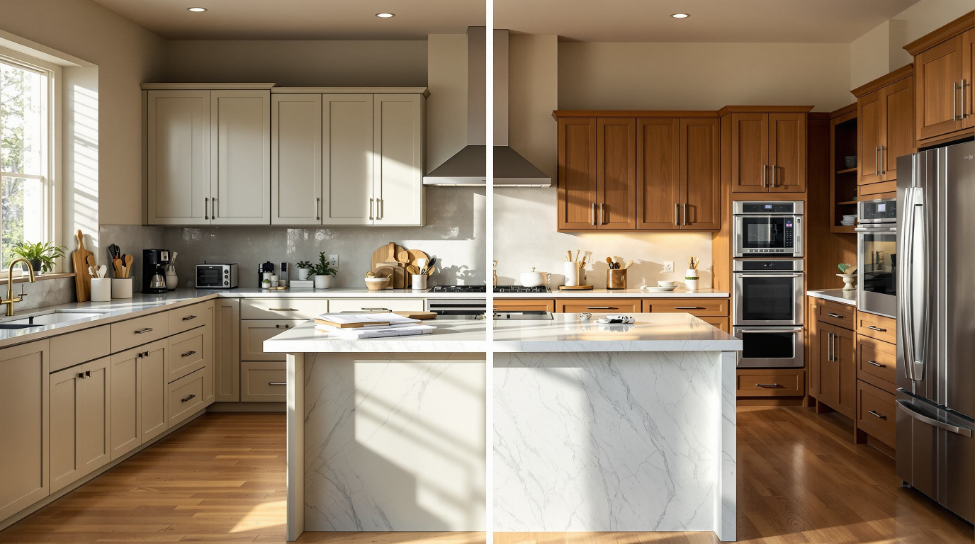
Kitchen Remodeling in Granger IN: Cost Guide
Quick Take: Kitchen remodels in Granger, IN run anywhere from $15,000 for a basic refresh to $70,000 or more for a full custom project. Cabinets and countertops take the biggest bite out of most budgets. Getting clear on your priorities before you start is what keeps costs from climbing.
Here's what we hear all the time. A homeowner gets a number from their neighbor, a different one from a contractor, and a third from a home improvement website. None of them match. That's not a mistake. Kitchen costs genuinely vary that much. The scope of work, the materials you pick, and whether your layout is changing all pull the number in a different direction.
A lot of Granger kitchens were built in the late '90s or early 2000s. They're structurally fine, but the storage is outdated and the finishes show their age. That's the starting point for most of the projects we see. This guide walks through what a kitchen remodel actually costs in this area, what pushes that number up or down, and how to put together a budget that doesn't fall apart halfway through.
What Kitchen Remodels Actually Cost in the Granger Area
Most projects land in one of three ranges. A cosmetic refresh, new cabinets, updated countertops, and fixture swaps with no layout changes, usually runs between $15,000 and $30,000. It's the right move for a kitchen that works fine spatially but needs new everything on the surface.
Step up to a mid-range full remodel and you're looking at $35,000 to $65,000. That gets you better cabinetry, premium countertop materials, and usually some reconfiguration. Most Granger homeowners we work with end up here. They want a real change, but moving walls isn't part of the plan.
High-end custom work starts around $70,000 and goes up from there. Top-tier materials, fully custom cabinets, and bigger layout changes all come with a price. Labor costs have also gone up in the South Bend and Mishawaka area over the past few years, so that's worth building into your numbers from the start. Our kitchen remodeling services can give you a clearer picture of what each level actually looks like.
The Factors That Move Your Number the Most
A few decisions carry more weight than the rest. Lock these down early and the rest of the budget gets a lot easier to manage.
- Cabinet grade: Cabinets eat the biggest chunk of most kitchen budgets. Stock options cost less, but you're limited on sizing and finishes. Semi-custom and custom lines open things up, and the price follows.
- Countertop material: Quartz and granite price out differently, and your kitchen's square footage matters a lot here. A big kitchen with an island can see countertop costs double what a smaller galley layout would run.
- ·Layout changes: Staying in your current footprint saves serious money. The moment plumbing moves or a wall comes down, outside contractor costs enter the picture. Good kitchen design planning upfront helps you decide if those changes are worth the added cost.
- Appliance tier: This one catches people off guard. A full mid-grade appliance suite can run $5,000 to $10,000. Go up a tier and that number jumps fast.
Cabinets and Countertops: Where Most of the Budget Goes
Cabinet Costs
Cabinets take 30 to 40 percent of the total budget on most projects. Stock cabinets are the entry point. They're more affordable, but you work within fixed sizes and whatever finishes are available. Semi-custom gives you more room to fit your space and your style. Full custom is the most flexible option, and the cost reflects that. We carry lines like Mouser Cabinetry, Wellborn, and Waypoint Living Spaces, so customers have real options across all three tiers. Browse our kitchen cabinet options to see what each one looks like in person.
Countertop Costs
Countertops are the second biggest line item. Quartz runs roughly $70 to $130 per square foot installed. It's a strong choice for busy family kitchens because it holds up well and doesn't need much maintenance. Granite falls in a similar range but varies more depending on the slab. Engineered quartz brands like Silestone, Cambria, and Caesarstone give you consistent patterning and a wide range of finishes. Kitchen size and island square footage will drive the final number more than almost anything else here.
The Costs People Forget to Budget For
Cabinets and countertops get most of the attention when people are putting together a budget. These four things don't get as much, but they show up on almost every project.
- Permits: Touch the plumbing or electrical and you'll need permits in most Indiana municipalities. Fees vary, but add a few hundred dollars to your total at minimum.
- Structural surprises: Homes from the late '90s and early 2000s sometimes hide mold behind walls. Outdated wiring is another common find. Old plumbing too. Nobody knows what's back there until demo day.
- Temporary kitchen setup: You'll be without a kitchen for weeks. A microwave on the dining room table, paper plates, and takeout add up faster than most families think.
- Delivery delays: Midwest winters slow things down. Supply chain issues do too. Material lead times can stretch by several weeks, and that pushes your contractor's schedule back with it.
We always tell customers to pad the budget by 10 to 15 percent. Not because something will definitely go wrong. Because when something does come up, you want room to handle it without stopping the project.
How to Set a Budget That Actually Holds
The biggest budgeting mistake we see? People pick a number before they know what they actually want. Start with your must-haves instead. Figure out what the kitchen absolutely needs to do differently, and price from there.
Get a detailed written proposal before anything gets ordered. A solid proposal breaks down materials, labor, and lead times so you know exactly what you're paying for. Our team goes through every line with customers before a single product goes on order.
See the materials in person if you can. Online photos don't show you how a finish looks under your kitchen lighting. Our Granger showroom at 1245 East University Drive lets you put things side by side before you commit. A lot of homeowners also find that combining a kitchen project with a bathroom remodeling update makes contractor scheduling easier and stretches the budget further.
Ask about lead times before you lock in a start date. Some cabinet lines take six to ten weeks. Certain countertop slabs take just as long. That information changes your timeline, and your contractor needs to know it too.
Start With a Conversation, Not a Guess
A number from a website gets you in the ballpark. A real estimate comes from sitting down, looking at your actual kitchen, and talking through what you want to change. That conversation is where the budget gets real.
Leatherman Supply has been helping Granger and Michiana homeowners plan and build kitchen projects for over 60 years. Our team works with you from the first consultation through the final walkthrough. We make sure what you pick in the showroom performs just as well once it's installed in your home. Stop by our Granger location at 1245 East University Drive or call us at (574) 533-0597 to get started.